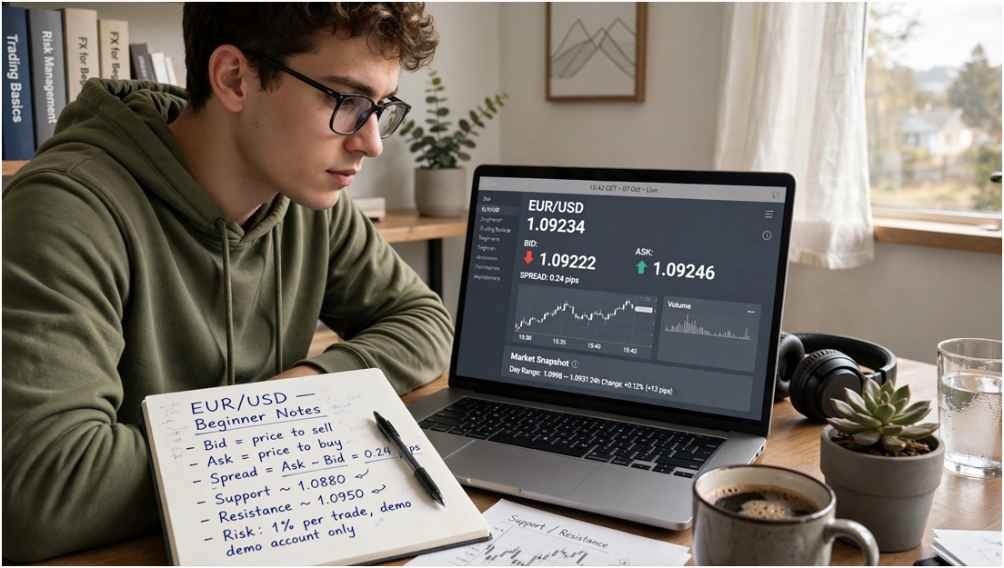

A stressful workday can become even more exhausting when financial markets demand your attention. Between office meetings, unexpected deadlines, and fluctuating currency prices, even experienced traders can struggle to make rational decisions.
Understanding how to manage trading stress while working a full time job begins with recognizing that successful trading does not require constant market participation. It requires realistic scheduling, controlled financial exposure, and enough mental energy to evaluate opportunities objectively.
The most effective approach is to make trading fit around your employment rather than allowing market movements to interrupt your professional responsibilities.
Choose a Trading Strategy That Fits Your Employment Schedule
Prioritize Higher Timeframes Over Constant Monitoring
Short-term scalping requires continuous attention, quick execution, and immediate reactions to price changes. Those requirements rarely align with a traditional nine-to-five office schedule.
Swing trading or position trading may offer greater flexibility because decisions develop over several hours, days, or weeks.
For example, someone working from 9 a.m. to 5 p.m. Eastern Time could analyze daily forex charts after dinner and identify potential opportunities for the following session.
Hourly charts may also work when entries can be planned without interrupting employment duties.
However, higher timeframes do not eliminate overnight gaps, economic announcement risks, or unexpected losses.
Establish a Defined Market Participation Window
The New York Stock Exchange’s regular session runs from 9:30 a.m. to 4 p.m. Eastern Time, overlapping with many American employees’ working hours.
Instead of monitoring markets continuously, establish specific periods for analysis and review.
A practical routine might involve fifteen minutes of preparation before work, a brief scheduled check during an authorized break, and thirty minutes of detailed analysis after work.
Avoid active trading during meetings, customer interactions, or responsibilities requiring sustained concentration.
Replace Emotional Decisions With Written Trading Rules

A structured trading plan reduces the temptation to improvise under pressure.
Before opening any position, determine the entry price, invalidation level, stop-loss, potential profit target, and acceptable financial exposure.
Calculate Risk Before Entering a Position
Consider a trader with a $10,000 account who chooses to risk 0.5% on a single trade.
The maximum planned loss would be $50.
If the setup requires a $0.0020 stop distance on EUR/USD, position size should be calculated using that distance and the instrument’s pip value.
This approach connects position sizing to risk tolerance rather than confidence or excitement.
The Financial Industry Regulatory Authority emphasizes the substantial risks associated with active trading, particularly when leverage and limited resources are involved.
A smaller position may reduce financial and emotional pressure, although losses can still exceed expectations during volatile conditions.
Set Daily and Weekly Loss Limits
Establish a maximum acceptable loss before the trading week begins.
For example, a trader might voluntarily stop opening new positions after reaching a predefined daily risk threshold.
These limits are personal risk-management rules, not guarantees against losses.
Once the threshold is reached, review the trading journal instead of immediately searching for another setup.
Use Technology to Reduce Unnecessary Market Anxiety
Repeatedly checking trading applications creates interruptions that can damage both workplace productivity and concentration.
Price alerts can help reduce this habit.
Set notifications around meaningful support levels, resistance zones, or predefined technical conditions rather than every small market movement.
Bracket orders, where supported, can help establish planned exits.
However, the U.S. Securities and Exchange Commission warns that stop orders can execute at prices substantially different from their stop levels during rapid market movements.
Stop-limit orders offer price control but might remain unfilled.
Automation therefore reduces monitoring demands without eliminating execution risk.
Traders should also maintain reliable account security, understand their broker’s order functionality, and avoid assuming that every notification requires immediate action.
Separate Workplace Stress From Trading Decisions

A frustrating day at the office can influence financial decisions long after working hours end. Before reviewing charts, create a transition period that allows workplace emotions to settle.
A short walk, light exercise, breathing practice, or uninterrupted meal can establish separation between professional responsibilities and market activity.
The National Institutes of Health reports that mindfulness-based practices may help reduce perceived stress and anxiety symptoms.
These techniques are supportive habits rather than proven methods for improving trading profits.
Use a Simple Emotional Readiness Test
Before placing a trade, evaluate three conditions: emotional stability, physical energy, and willingness to accept the planned loss.
If you feel angry, mentally exhausted, or desperate to recover money, postpone execution.
Understanding the psychology of sitting out when there are no clear trading setups can help traders develop patience, avoid impulsive entries, and maintain emotional discipline when market conditions do not match their strategies.
Similarly, if losing the amount at risk would disrupt your sleep or concentration, reconsider the position size.
One missed trading opportunity is generally less damaging than an impulsive decision that compromises both finances and workplace performance.
Protect Sleep, Exercise, and Personal Relationships
Trading performance should never depend on sacrificing basic health. According to the Centers for Disease Control and Prevention, adults generally need at least seven hours of sleep each night.
Insufficient rest can affect attention, memory, emotional well-being, and everyday functioning.
For employed traders, late-night chart analysis followed by early-morning work can create an unsustainable cycle.
Set a firm evening shutdown time, minimize unnecessary phone notifications, and avoid sacrificing sleep to monitor positions.
Exercise also provides a constructive alternative to repeatedly reviewing unrealized profits and losses.
Even brief walks during approved workplace breaks can interrupt prolonged sitting and create mental distance from market fluctuations.
Protect weekends, family activities, and hobbies from becoming extensions of the trading schedule.
Build a Realistic Weekly Trading Routine
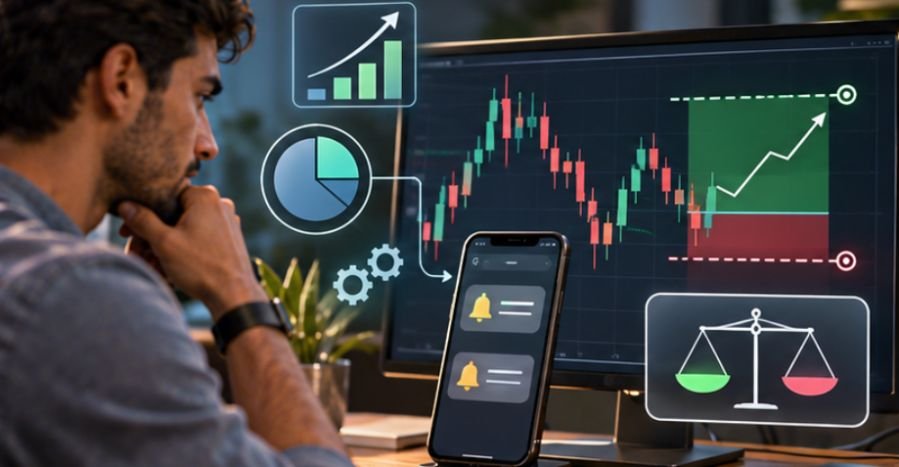
Learning how to manage trading stress while working a full time job becomes easier when every market activity has a defined purpose.
Before Work: Prepare Instead of Reacting
Review major economic announcements, identify important price levels, and update your watchlist.
Forex traders should understand how interest rates affect currency values, particularly around Federal Reserve announcements.
Avoid opening unfamiliar positions immediately before commuting or attending important meetings.
During Work: Maintain Professional Boundaries
Use alerts for important market conditions, but only review them when your employer’s policies and job responsibilities permit.
Never assume that personal trading is acceptable on company devices or networks.
If your schedule cannot accommodate safe trade management, choose a different trading style or remain out of the market.
After Work: Review Decisions Objectively
Record completed trades, emotional reactions, trading-rule violations, and relevant market conditions.
Understanding how liquidity affects the stock market can also provide perspective on unusual volatility and execution behavior.
Evaluate whether decisions followed the plan rather than judging every trade solely by profit or loss.
Dedicate one weekly session to reviewing patterns and adjusting procedures.
Recognize When Trading Stress Has Become Unmanageable
Occasional disappointment is normal, but persistent anxiety deserves attention.
Warning signs include disrupted sleep, hiding losses from family members, constantly checking positions during work, or feeling compelled to trade after financial setbacks.
If trading repeatedly interferes with employment, relationships, or mental health, reduce exposure or consider stopping.
Long-term investing or simulated trading may provide alternatives for individuals who cannot accommodate frequent market decisions.
Professional mental health support may also be appropriate when stress becomes persistent or difficult to control.
Frequently Asked Questions
1. Can someone trade forex successfully while working full time?
Yes, although profitability is never guaranteed. Higher-timeframe strategies, scheduled analysis, appropriate position sizing, and predefined exits can make trading more compatible with full-time employment.
2. What is the best way to avoid emotional trading after work?
Take a short recovery break, evaluate your emotional condition, and follow predefined rules. Avoid trading when exhausted, angry, or focused on recovering previous losses.
3. How to manage trading stress while working a full time job without checking charts constantly?
Use selective price alerts, planned review windows, and appropriate conditional orders. Choose strategies that do not require immediate reactions during working hours.
4. Should I stop trading if it affects my job performance?
Consider reducing trading activity or stopping temporarily. Protecting stable employment, health, and financial security should take priority over speculative market opportunities.
Make Trading Sustainable, Not Exhausting
I believe the healthiest trading routine is one that leaves enough energy for responsibilities beyond financial markets. A demanding career and active trading can coexist, but only when clear boundaries determine how much time, attention, and money each activity receives.
Instead of measuring commitment through screen time, I would focus on consistent preparation, disciplined risk management, and the ability to walk away from unfavorable opportunities.
Financial markets will continue offering potential setups tomorrow. Your professional reputation, physical health, and personal relationships deserve protection today.
The strongest trading routine is one you can maintain without sacrificing the life it is supposed to support.