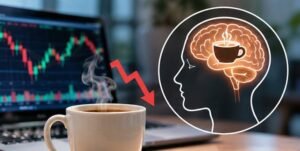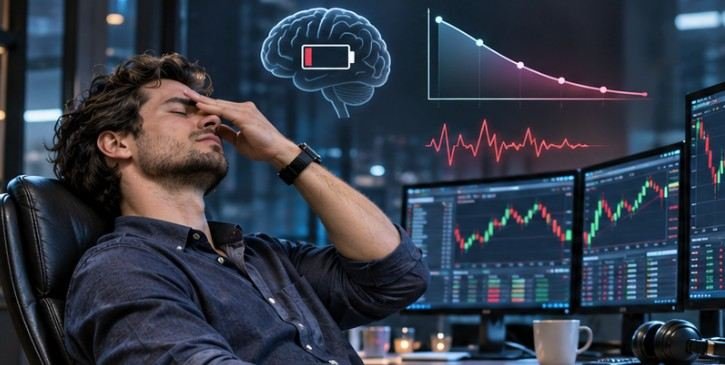
A profitable trading day can leave you just as mentally exhausted as a losing one. Constantly evaluating price movements, managing uncertainty, and controlling emotions can drain your concentration even when you make good decisions.
Understanding how to recover from mental fatigue after trading starts with recognizing that mental exhaustion is not necessarily a sign of poor discipline. It often reflects sustained cognitive effort and stress.
The most effective response is to disconnect from market activity, restore physical energy, and reduce unnecessary decisions before your next session. A structured recovery routine can help protect your judgment and prevent emotional trading.
Why Does Trading Leave You Mentally Exhausted?
Trading requires continuous attention, emotional regulation, and decision-making under uncertainty. Every price movement can introduce another choice: enter, exit, hold, adjust risk, or remain inactive.
This repeated evaluation creates cognitive demands, particularly during volatile markets.
Research published through the National Institutes of Health found that sleep deprivation can interfere with decision-making that requires people to update their choices based on feedback.
Although this research did not specifically examine traders, the findings help explain why fatigue and inadequate sleep deserve attention in financial decision-making.
Mental Fatigue vs. Emotional Exhaustion
Mental fatigue generally involves difficulty concentrating, slower thinking, and reduced motivation to process information.
Emotional exhaustion often develops from prolonged stress, disappointment, anxiety, or excessive pressure to perform.
For example, analyzing currency charts for several hours might produce mental fatigue. Experiencing repeated stop-loss hits while worrying about recovering losses can add emotional strain.
Both conditions may occur together, but they require more than simply improving technical trading skills.
What Should You Do Immediately After a Trading Session?
The first recovery period should focus on reducing stimulation rather than continuing to evaluate your performance.

Close Your Charts and Establish a Clear Stopping Point
Set a specific time to finish your trading session, especially if you trade major currency pairs during the New York session.
Once your planned trading activities are complete, close your platform, silence market alerts, and avoid repeatedly checking unrealized gains or losses.
If you maintain open positions, establish appropriate risk controls and a monitoring plan beforehand. Disconnecting should never mean ignoring unmanaged exposure.
A firm stopping routine helps separate trading responsibilities from personal time.
Use Physical Movement to Release Stress
Walking, stretching, cycling, or performing moderate exercise provides a useful transition after prolonged screen time.
The American Psychological Association explains that prolonged stress can affect concentration, memory, sleep, and physical health. It also recommends regular physical activity as a stress-management strategy.
A 15-minute outdoor walk is a practical starting point. You do not need an exhausting workout after an already demanding session.
Practice Slow Breathing to Reduce Tension
Sit comfortably, relax your shoulders, and breathe slowly for several minutes. One simple approach involves inhaling gently for four seconds and exhaling for six seconds. Adjust the rhythm if it feels uncomfortable.
The National Center for Complementary and Integrative Health reports preliminary evidence that diaphragmatic breathing may help reduce stress.
Breathing exercises will not repair every source of fatigue, but they can make it easier to transition into a calmer routine.
How Can You Clear Your Mind After a Difficult Trading Day?
Unfinished decisions often remain mentally distracting long after the trading platform closes. A brief written review can help organize those concerns without extending the session.

Complete a Five-Minute Trading Journal
Record your emotional state, the decisions that required the most effort, and whether you followed your trading plan.
Instead of criticizing yourself for a losing position, determine whether the trade met your entry and risk-management requirements.
A losing trade that followed your strategy is different from a loss caused by impulsive execution.
This distinction can reduce unnecessary self-criticism and make your next review more useful.
Stop Searching for Immediate Emotional Relief
After a frustrating session, some traders seek reassurance through market predictions, social media discussions, or additional trades.
However, emotionally charged information can reinforce impulsive decision-making.
Understanding how social media trading tips influence market judgment can help you recognize when online opinions are increasing stress rather than improving your analysis.
How Much Sleep Do Traders Need for Mental Recovery?
Most adults need at least seven hours of sleep per night, although individual requirements vary. The Centers for Disease Control and Prevention recommends seven or more hours for adults ages 18–60 and emphasizes the importance of consistent, good-quality sleep.
For traders following the London and New York sessions, irregular schedules can make sufficient rest difficult.
Consider establishing consistent sleeping hours, avoiding late-night chart monitoring, and limiting caffeine near bedtime.
If your trading strategy regularly interrupts sleep, changing your trading schedule may be more effective than trying to increase your tolerance for exhaustion.
Hydration and balanced meals also support general well-being, although neither replaces adequate sleep.
How Do You Know Whether You Need a Longer Trading Break?

Ordinary post-session fatigue often improves with rest. Persistent exhaustion, however, may indicate a more significant problem.
The World Health Organization describes burnout as an occupational phenomenon associated with chronic workplace stress that has not been successfully managed.
Trading fatigue is not automatically burnout, and burnout is not classified as a medical condition.
Nevertheless, persistent irritability, declining concentration, loss of motivation, and increasing detachment from trading deserve attention.
Consider taking several days away from active trading when regular recovery routines are no longer helping.
If exhaustion continues for weeks, affects everyday functioning, or accompanies significant sleep or mood problems, consult a healthcare professional rather than assuming trading is the only cause.
When Is It Safe to Start Trading Again?
Before returning, assess your concentration, emotional stability, and willingness to follow predefined rules.
Ask yourself three questions:
- Can I explain my trading setup without rushing?
- Can I accept a potential loss without feeling compelled to recover it immediately?
- Can I follow my position-sizing and stop-loss rules consistently?
If the answer to any question is no, consider delaying live trading.
You might also return through a demo account, monitor fewer currency pairs, or reduce position sizes temporarily.
The goal is not to eliminate every emotion. It is to avoid making financial decisions while noticeably impaired by exhaustion.
Reviewing unrealistic profit expectations in trading may also help reduce the pressure to generate income from every market session.
Frequently Asked Questions
1. How long does mental fatigue last after trading?
Mild fatigue may improve after a short break or a good night’s sleep. Recovery varies with sleep quality, stress, workload, and individual health.
2. Can exercise reduce trading-related mental exhaustion?
Yes. Moderate physical activity may relieve stress and improve mood. Walking or stretching can be useful after extended chart monitoring.
3. Should I trade when I feel mentally exhausted?
Avoid opening discretionary positions when your concentration or judgment is impaired. Rest, review your risk exposure, and resume only when you can follow your trading plan.
4. What is the best way to recover from trading burnout?
Reduce or pause trading, restore consistent sleep, address ongoing stressors, and seek professional support when exhaustion persists or disrupts daily functioning.
Protect Your Mental Energy Before Your Capital
Learning how to recover from mental fatigue after trading is ultimately about respecting the limits of attention and emotional endurance.
I believe a successful trading routine should include time away from the markets, not just better entry signals and risk calculations. A disciplined trader knows when continued participation offers little value.
Recovery does not require expensive supplements, complicated productivity systems, or endless analysis. Consistent sleep, physical movement, emotional awareness, and clear trading boundaries provide a practical foundation.
The market will continue producing opportunities tomorrow. Your ability to recognize and evaluate them depends partly on how well you recover today.