How to Stop Revenge Trading After a Big Loss Without Chasing It
A major loss can make the next trade feel urgent. I may believe one larger position will restore my account or confidence. That urgency is why learning how to stop revenge trading after a big loss matters. The safest response is a recovery system that removes access, reduces emotional pressure, audits the damage, and sets conditions for returning.
What Should I Do Immediately After a Big Trading Loss?
I would freeze my trading infrastructure before studying another chart. I would cancel pending orders, close the desktop platform, log out of mobile and browser sessions, and disconnect APIs, automated strategies, copy-trading tools, and fast-order panels.
When my broker offers a kill switch, daily lock, or order restriction, I would activate it. A broker-supported lock is safer than using a password I might lose. I would never share credentials or authentication codes.
Closing access creates a circuit breaker. An open chart can make every price move look like a recovery opportunity when no valid setup exists.
How Long Should I Stop Trading After a Large Loss?
I would leave my desk and avoid the market for at least two hours. Walking, exercising, eating, or completing another offline task can reduce emotional intensity.
After an unusually large loss, I would stop live trading for the day and wait until the next session. Sleeping on the decision helps the immediate fight-or-flight reaction settle. However, 24 hours is only a minimum reset. A serious rule violation or account-threatening drawdown may require several days away or simulator trading.
How Do I Review the Loss Without Trading Again?
Once calm, I would shift from trader to auditor. I would record the exact dollar loss, instrument, position size, setup, entry, stop, exit, and emotional state in my trading journal.
Next, I would categorize the event. Did a valid setup fail? Did I use too much leverage, move the stop, enter early, or ignore my daily loss limit? Did news, slippage, or a platform problem increase the damage? I would also calculate the effect on my weekly and monthly drawdown limits.
I would also review whether economic data, interest-rate expectations, earnings results, or company news influenced the trade. Understanding the elements of fundamental analysis helps me separate a genuine market-moving event from an emotional mistake in my execution, giving me a clearer explanation of why the position failed.
My historical win rate and average loss can restore perspective, but statistics should never excuse a rule violation.
Was It a Good Trade With a Bad Outcome?
A valid, properly sized trade can still lose. I should document it without changing my system around one result.
Did I Break My Trading Rules?
If I oversized, widened the stop, chased an entry, or continued after reaching my limit, I need to name that behavior. “I traded badly” is too vague to prevent repetition.
Which Platform Restrictions Can Stop Revenge Trading?
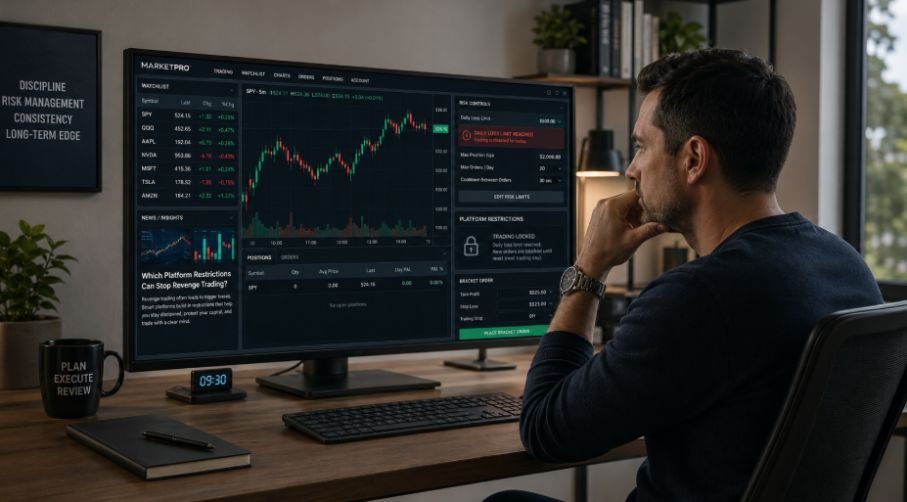
I would define a maximum daily dollar loss before the U.S. market session begins. Once the account reaches it, the platform should block new orders when that feature is available.
I would also cap daily trades and hard-code the maximum stock quantity, options contracts, futures contracts, or forex lot size I can use. Static limits make it harder to double risk after a loss.
An accountability partner can confirm that I activated the restrictions, but I would never hand over unrestricted account access. The safer sequence is to define the daily loss limit, trigger an automatic lock, and require a full reset before trading resumes.
How Can I Stop Chasing Breakeven?
The loss is a sunk cost. The market does not know my entry price, account balance, or recovery target. Trying to win back a specific amount ties the next decision to the previous outcome instead of the current setup.
I would judge success by execution quality. Did I wait for confirmation, use the planned size, respect the stop, and stop when the session limit triggered? Capital preservation comes first. Staying solvent gives me another opportunity tomorrow. Recovering everything today is not a valid trading goal.
Should I Reduce Position Size After a Major Drawdown?
Yes, but the reduction should follow a written plan. One approach is to cut normal risk by 50% for the next three rule-compliant trades. Another is to use a simulator until I can execute without chasing outcomes.
I would restore normal size only after completing the required number of disciplined trades and confirming the drawdown remains within my plan.
When Is It Safe to Start Trading Again?
I am ready only when I can explain the loss calmly, accept that I cannot recover it on demand, and trade without targeting breakeven. My daily loss limit, trade cap, maximum size, stop placement, and shutdown rule should be set before I place another order.
If I still feel urgency, anger, shame, or a need to prove myself, I would stay out. If repeated losses lead me to borrow money, use funds needed for bills, or lose control of my behavior, I should pause trading and seek qualified financial or mental health support.
Frequently Asked Questions
1. How Can I Stop Myself From Trading Again Immediately?
Close every platform session, cancel pending orders, disconnect automated tools, and activate a broker-supported lock.
2. Is Every Trade After a Loss a Revenge Trade?
No. A new trade is legitimate when it independently meets the same setup, risk, and timing rules that applied before the loss.
3. How Do I Know How to Stop Revenge Trading After a Big Loss Permanently?
Use hard platform limits, a mandatory cooling-off period, detailed journaling, reduced position size, and objective restart conditions instead of relying on willpower.
4. Should I Always Stay Out of the Market for 24 Hours?
A full day is a useful minimum, but serious rule violations or an account-threatening drawdown may require a longer pause.
Regaining Control Before the Next Trade
I cannot undo a large loss, but I can prevent a destructive sequence. My best defense is to remove access, cool down, audit the event, enforce hard limits, and return with smaller risk only after meeting clear conditions. The goal is to build a process that protects me when fear, anger, and urgency appear.
This article is for educational purposes and does not provide personalized investment, financial, tax, or mental health advice.