One poor night’s sleep can change how a trader interprets risk, responds to price movements, and handles losses. The danger isn’t simply feeling tired. It’s making questionable financial decisions while believing your judgment remains sharp.
So, how does lack of sleep affect trading decisions? Sleep deprivation weakens attention, slows reaction times, disrupts emotional regulation, and can distort risk assessment. These changes may encourage impulsive entries, missed opportunities, and costly trading mistakes.
For traders following the New York stock market, monitoring forex sessions, or trading futures, recognizing fatigue before placing an order can be as important as analyzing the market itself.
How Does Poor Sleep Change Trading Behavior?
Slower Reactions Can Create Expensive Execution Errors
Short-term trading often requires processing new information within seconds. When attention deteriorates, traders may overlook changing spreads, miss confirmation signals, or respond too slowly to unexpected volatility.
Consider a forex trader watching EUR/USD during a major US inflation announcement.
A rested trader might recognize that the initial price movement lacks confirmation and wait. A tired trader could chase the first move, enter at an unfavorable price, and discover that momentum has already reversed.
Fatigue can also increase operational mistakes, including incorrect lot sizes, misplaced orders, and forgotten stop-loss adjustments.
Emotional Trading Becomes Harder to Control
Sleep deprivation can make ordinary trading setbacks feel disproportionately frustrating.
A small loss that would normally be manageable might provoke anger, anxiety, or an urgent desire to recover money.
This can encourage revenge trading, excessive position sizing, and repeated entries without proper confirmation.
Research published through the National Library of Medicine found that sleep deprivation can interfere with how individuals use negative feedback during risky decision-making.
For traders, this highlights an important problem: exhaustion may make it harder to learn from a losing position before opening another.
A structured pre-market routine for emotional day traders can help establish behavioral boundaries before emotions influence execution.
Risk Perception Becomes Less Reliable

Does sleep deprivation always make traders more aggressive? Not necessarily.
Research examining sleep loss and financial risk-taking suggests its effects depend on the situation, including how potential gains and losses are presented.
Some exhausted individuals become more willing to pursue uncertain rewards. Others become excessively cautious or struggle to evaluate probabilities.
For example, a trader might increase leverage after several winning positions because recent success feels more important than the downside.
Another might abandon a valid setup because fatigue increases anxiety about losing.
Both behaviors represent deviations from a consistent trading strategy.
What Does Research Reveal About Sleep and Trading Performance?
Evidence increasingly suggests that sleep disruptions can affect financial behavior, although their impact varies across investors and markets.
A 2025 working paper from the National Bureau of Economic Research, titled Sleep Disruption and Retail Investor Trading, examined relationships between sunset timing, daylight saving changes, and retail investment outcomes.
Researchers Hee Seo Han, David Hirshleifer, Jinfei Sheng, and Zheng Sun found that later sunset times were associated with lower abnormal returns on retail trades.
The negative relationship was particularly notable for trades involving stocks with company announcements, where attention to new information matters.
However, the findings concern stock investors, not a controlled experiment proving identical effects among forex traders.
The broader lesson is that environmental disruptions affecting alertness may influence how investors process information and execute decisions.
Why Small Mistakes Can Produce Larger Losses
Trading errors rarely occur in isolation. A missed entry may trigger frustration. Frustration encourages chasing prices. A rushed entry leads to an unfavorable position, followed by an emotional attempt to recover the loss.
Consider a hypothetical $10,000 trading account.
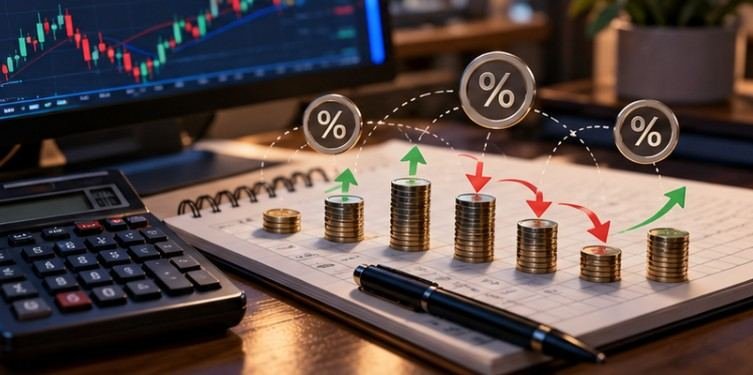
If a trader normally risks 1% per position, the planned maximum loss before execution differences is $100.
Increasing that exposure to 3% after a frustrating session raises the planned risk to $300.
Three consecutive losses at that higher exposure would cost approximately $900 before fees, spreads, or slippage, assuming the same initial account balance.
The calculation illustrates how impaired discipline can magnify financial damage without any change in market conditions.
How Can You Tell Whether You’re Too Tired to Trade?
Rather than relying entirely on motivation, I recommend evaluating mental readiness before opening a trading platform.
A practical fatigue assessment should examine sleep duration, concentration, emotional stability, and willingness to follow established rules.
The Three-Minute Trading Readiness Test

Before placing your first order, ask yourself:
- Did I get enough uninterrupted sleep to feel alert?
- Can I explain my entry, stop-loss, and profit target without hesitation?
- Am I comfortable accepting a normal losing trade?
- Have I made unusual mistakes or repeatedly lost focus this morning?
- Would I still take this setup if I weren’t trying to recover yesterday’s losses?
These questions aren’t a clinically validated fatigue test. They are a practical way to identify warning signs.
If concentration feels unreliable or emotions are unusually intense, stepping away is generally safer than forcing a trading opportunity.
For traders struggling with inactivity, understanding the psychology of sitting out when there are no clear trading setups can reinforce disciplined decision-making.
How Can Traders Reduce Mistakes After Poor Sleep?
Establish Clear Rules for Trading While Fatigued
Create predetermined restrictions rather than deciding what feels acceptable during a stressful session.
For example, a personal risk policy might prohibit live trading after severe sleep disruption and require a demonstration session when concentration feels uncertain.
These are illustrative safeguards, not scientifically established sleep thresholds for trading.
Reducing position sizes may limit exposure, but it cannot eliminate errors caused by impaired judgment.
Use Technology Without Depending on It Completely
Trading alerts, predefined exit levels, and position-sizing calculators can reduce repetitive mental work. However, automated orders still carry execution risks.
The Financial Industry Regulatory Authority explains how different order types affect execution. Traders should understand that stop orders do not necessarily guarantee a particular execution price during volatile conditions.
For forex traders, the exact protections and execution rules depend on the broker and trading platform. Automation supports discipline but cannot replace alertness.
Protect Sleep Around Market Sessions
The Centers for Disease Control and Prevention recommends that adults ages 18–60 regularly obtain at least seven hours of sleep.
For US-based forex traders, this may require choosing trading sessions that fit their normal sleep schedule instead of repeatedly waking overnight for international market activity.
Maintain consistent sleep and wake times, limit late caffeine intake, and avoid monitoring oversized positions from bed.
Most importantly, don’t assume caffeine restores every aspect of judgment affected by sleep loss.
Frequently Asked Questions
1. How does lack of sleep affect trading decisions during volatile markets?
Fatigue can slow information processing, increase emotional reactions, and reduce attention to trading rules. These weaknesses become more consequential when prices change rapidly and decisions require immediate evaluation.
2. Can sleep deprivation make traders take bigger risks?
Yes, in some circumstances. However, research also shows that sleep deprivation can encourage caution or inconsistent choices depending on the task and how potential losses are perceived.
3. How many hours should traders sleep?
Most healthy adults should aim for at least seven hours nightly. Individual requirements vary, and sleep quality matters alongside duration.
4. Should I trade after a sleepless night?
Avoiding discretionary live trading is the safer option when your concentration or judgment is impaired. Reviewing historical charts or practicing in a demo account may be more appropriate.
Best Trading Decision May Happen Before the Market Opens
I believe one of the most overlooked trading skills is recognizing when the mind isn’t prepared to make financial decisions.
Sleep deprivation doesn’t automatically cause losses, and getting eight hours of sleep won’t turn an ineffective strategy into a profitable one. However, adequate rest supports the concentration, emotional stability, and self-control required to execute a trading plan consistently.
Before your next session, evaluate your readiness with the same seriousness you apply to market conditions.
The market will continue offering opportunities. Protecting your judgment ensures you’re better prepared to evaluate them.