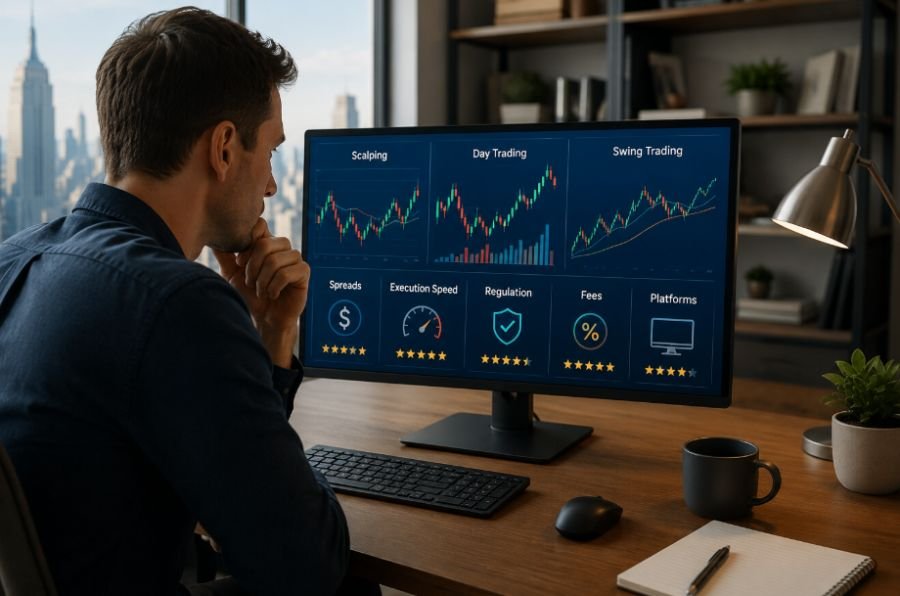
Choosing a forex broker sounds simple until you start comparing your options. One broker promotes ultra-low spreads, another highlights advanced trading tools, while others promise lightning-fast execution and exclusive account perks. For someone new to forex trading, it’s easy to assume the broker with the biggest claims must be the best choice.
The truth is that there isn’t one broker that’s perfect for everyone. Learning how to choose a forex broker starts with understanding how you plan to trade. Your strategy, trading frequency, and risk tolerance all influence which features will actually benefit you. When your broker complements your trading style, you’ll spend less time dealing with unnecessary costs and technical frustrations and more time making informed trading decisions.
Start by Understanding Your Trading Style

Before comparing brokers, take a step back and think about how you want to approach the market. The way you trade determines which broker features deserve the most attention.
Day Traders and Scalpers
Day traders and scalpers open multiple positions within short periods, often looking to profit from small price movements. Since every second and every pip matter, execution speed becomes one of the most important factors.
If this describes your trading style, prioritize brokers that offer:
- Fast order execution
- Tight spreads
- Low latency
- Reliable liquidity
- Stable trading platforms during volatile markets
Because active traders place a high number of trades, even small differences in transaction costs can have a noticeable impact over time.
Swing Traders and Position Traders
Swing traders and long-term position traders typically hold trades for several days or weeks. Their priorities are different from those of short-term traders.
Instead of chasing the lowest spread possible, they usually benefit more from predictable pricing, platform stability, and competitive overnight financing costs. Swap rates become increasingly important because positions remain open beyond the trading day. A broker with transparent pricing and dependable execution often provides greater value than one simply advertising the lowest spreads.
Understanding your own approach before comparing brokers prevents you from paying for features you’ll rarely use while ensuring you don’t overlook the ones that genuinely matter.
Match the Broker to Your Trading Strategy
Not all forex brokers execute trades the same way. Behind every trading platform is an execution model that affects pricing, order speed, and overall trading experience.
If you’re still deciding which execution model fits your needs, reviewing an ECN vs STP broker comparison can help you understand how each option handles orders and which one aligns better with your trading style.
The key isn’t choosing the broker type that’s considered the most advanced. It’s choosing the one that supports the way you actually trade.
Look Beyond the Lowest Trading Costs

One of the biggest mistakes new traders make is comparing brokers based only on the advertised spread. While spreads certainly matter, they’re only one part of the total cost of trading.
It is also useful to understand who are the main participants in the forex market, because banks, financial institutions, liquidity providers, corporations, and individual traders all contribute to market liquidity and pricing. A broker with access to a strong network of participants may provide more competitive prices and reliable execution, particularly during active trading sessions.
A complete evaluation should include:
- Bid-ask spreads
- Commission charges
- Overnight swap fees
- Deposit and withdrawal fees
- Currency conversion fees
- Inactivity fees
Looking at your total trading costs instead of focusing on a single number gives you a much clearer picture of what you’ll actually pay over time.
For example, a broker offering exceptionally tight spreads may charge higher commissions, while another with slightly wider spreads could have lower overall trading costs depending on how frequently you trade. That’s why experienced traders evaluate the complete pricing structure rather than relying on marketing headlines alone.
Choose a Platform That Fits Your Workflow
Your trading platform is where every chart, analysis, and order comes together. Even the most competitive pricing won’t make up for a platform that feels slow, confusing, or unreliable.
Most reputable brokers support platforms like MetaTrader 4 (MT4), MetaTrader 5 (MT5), or cTrader. Each offers different strengths depending on your trading style.
MT4 remains a favorite among traders who rely on Expert Advisors and automated strategies. MT5 expands on those capabilities with additional timeframes, more technical indicators, and broader asset support. Trader is often appreciated for its modern interface, advanced charting tools, and detailed market depth.
Beyond features, pay attention to the overall trading experience. A platform should be easy to navigate, responsive during busy market sessions, and available across desktop and mobile devices so you can manage positions wherever you are.
Test Everything With a Demo Account
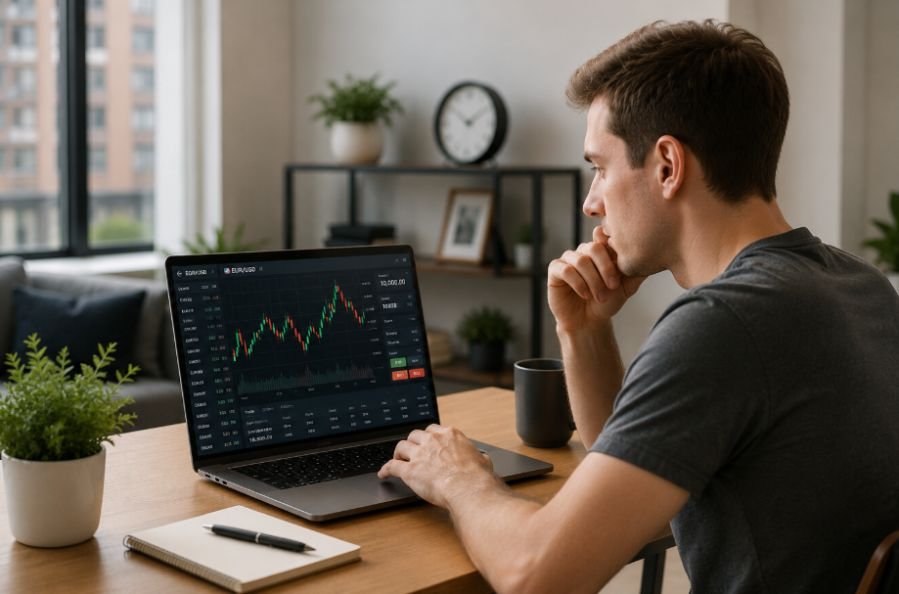
A demo account gives you the opportunity to experience a broker’s platform without risking real money. It also helps you determine whether the trading environment matches your expectations.
Use the demo account to:
- Explore the platform and charting tools.
- Place trades using your preferred strategy.
- Check execution speed and order placement.
- Contact customer support to see how quickly they respond.
Once you’re comfortable with the overall experience, you can move to a live account with greater confidence.
Questions to Ask Before Opening an Account
Before making your first deposit, ask yourself these simple questions:
- Is the broker properly regulated?
- Are all trading fees clearly explained?
- Does the platform support my trading style?
- Can I test the platform with a demo account?
- Is customer support responsive when I need help?
- Are deposits and withdrawals straightforward?
If you can answer “yes” to each of these, you’re likely looking at a broker worth considering.
Frequently Asked Questions
1. What is the most important factor when choosing a forex broker?
Regulation should always come first. A regulated broker offers greater transparency, better protection for client funds, and follows established financial standards.
2. Should beginners choose the broker with the lowest spreads?
Not necessarily. Beginners should consider the overall trading experience, including platform usability, customer support, fees, and educational resources rather than focusing only on spreads.
3. Why should I use a demo account first?
A demo account lets you test the platform, practice your strategy, and understand how the broker operates without risking your own money.
4. Does my trading style really affect broker selection?
Yes. Different trading styles require different features. A broker that works well for a scalper may not be the best choice for a swing or position trader.
The Right Broker Supports Better Trading Decisions
Finding the right forex broker isn’t about chasing the biggest promotions or the lowest advertised spreads. It’s about choosing a broker that fits the way you trade, offers transparent pricing, provides reliable execution, and gives you the confidence to focus on your strategy instead of worrying about your trading environment.
A little extra research before opening an account can save you time, money, and frustration later. When your broker matches your trading style, you’re in a much better position to build consistency over the long run.