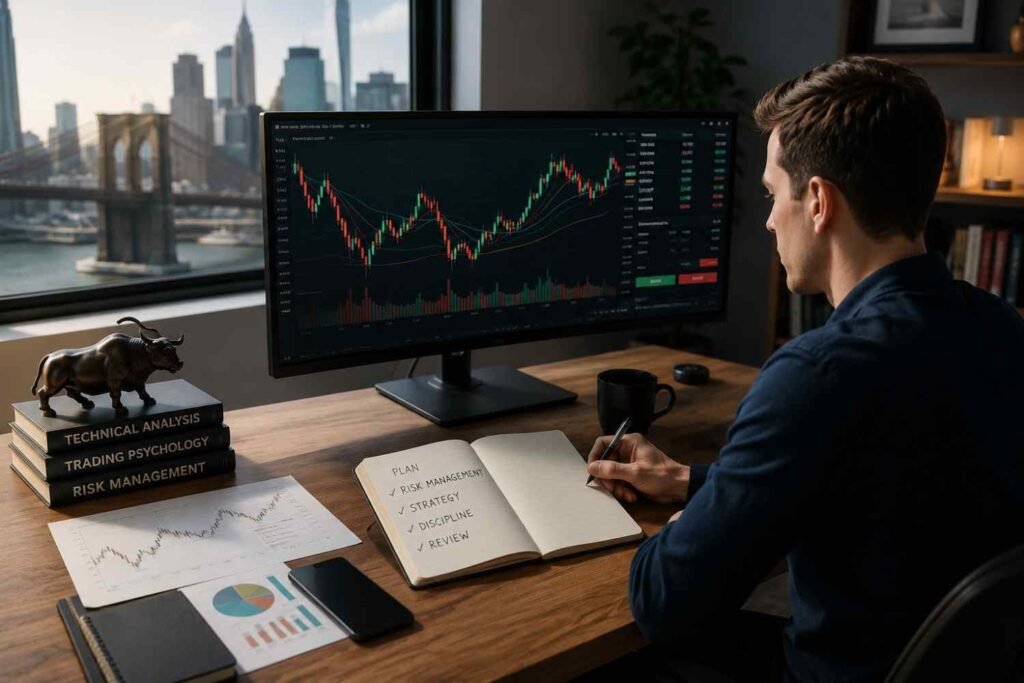

Forex scalping can generate frequent trading opportunities, but it also exposes traders to rapid price changes, high leverage, and repeated transaction costs. When targeting small movements of 5 to 15 pips, one oversized loss can erase several profitable trades.
I believe understanding how to manage risk when scalping forex matters more than identifying the perfect entry point. A disciplined approach combines predefined stop-loss orders, appropriate position sizing, controlled leverage, and realistic profit targets.
In this guide, I’ll explain nine practical forex scalping risk management techniques that help traders reduce unnecessary exposure and make more consistent decisions.
Why Is Risk Management Important in Forex Scalping?
Forex scalping involves entering and exiting currency trades within seconds or minutes. Traders often use one-minute or five-minute charts to identify short-term price movements.
Because profit targets are relatively small, spreads, commissions, and slippage can significantly affect results.
High trading frequency also increases the possibility of emotional decisions. A trader who takes multiple losing positions may attempt to recover losses by increasing trade sizes.
I prefer focusing on capital preservation before potential returns. Establishing clear trading rules helps prevent a short losing streak from becoming a substantial account drawdown.
How Can You Manage Risk When Scalping Forex Effectively?
1. Limit Your Risk to 0.5%–1% per Trade
A practical starting point is establishing a fixed percentage of account equity that you’re willing to risk on each position.
Some traders use 0.5% to 1% as a conservative planning range, although no percentage guarantees safety.
For example, a trader with a $5,000 account who risks 1% establishes a planned loss limit of $50 per trade.
I prefer using a consistent percentage instead of increasing exposure after winning or losing trades.
2. Use Hard Stop-Loss Orders on Every Trade

A stop-loss strategy for forex scalping should define the exit before the position opens.
Where supported, protective stops can be submitted alongside entry orders to reduce the risk of forgetting to establish an exit.
I would avoid widening a stop-loss simply because the market moves against my position. Doing so increases the original risk without necessarily improving the trade.
However, ordinary stop-loss orders aren’t guaranteed. During sharp market movements, execution may occur beyond the intended stop price.
Traders who want to understand the difference between standard and price-protected exit orders can compare forex stop loss vs. guaranteed stop loss to evaluate how each option handles slippage and sudden market gaps.
3. Calculate Forex Position Sizing Before Entering
Forex position sizing determines how much currency exposure you can take while respecting your planned dollar-risk limit.
The basic formula is:
Position Size = Dollar Risk ÷ (Stop-Loss Distance × Pip Value per Unit)
Suppose you have a $10,000 trading account and establish a 1% risk limit. Your planned risk is $100.
With a 10-pip stop on EUR/USD, assuming a USD-denominated account, the calculation produces approximately one standard lot before commissions and slippage.
This is a calculation example, not a recommended lot size. Actual position sizing should include trading costs, available margin, and execution uncertainty.
4. Maintain a Realistic Risk-Reward Ratio
The risk-reward ratio in forex trading compares the potential loss with the expected profit.
For example, a 10-pip profit target combined with a 7-pip stop creates a gross reward-to-risk ratio of approximately 1.43:1.
Some scalpers aim for 1:1 or 1.5:1, but these ratios aren’t universally profitable. Trading costs and win rates determine whether a strategy has a positive long-term expectancy.
I would reject a setup when the potential net reward doesn’t justify the planned risk.
5. Control Forex Leverage and Margin Exposure
Leverage risk in forex trading increases when traders control positions that are too large relative to their account balances.
In the United States, retail forex leverage is generally limited to 50:1 for major currency pairs and 20:1 for other pairs.
Nevertheless, using maximum available leverage can expose traders to rapid losses and potential margin liquidation.
I would also monitor correlated currency positions because multiple trades may create overlapping exposure to the same market movement.
6. Set a Strict Daily Maximum Loss Limit

A daily loss limit helps prevent revenge trading and excessive account drawdowns.
For example, a trader might establish a 3% daily maximum loss threshold, including trading expenses and open-position losses.
Understanding forex drawdown recovery strategies can also help traders respond to accumulated losses without increasing position sizes or abandoning their risk limits.
Once that threshold is reached, trading should stop for the session. The limit is a personal risk rule, not a guarantee that losses cannot exceed it.
I would also limit active scalping sessions to one or two focused hours when appropriate. Scheduled breaks can reduce fatigue and unnecessary trades.
7. Trade Liquid Currency Pairs and Manage Costs
Scalpers frequently favor liquid major pairs such as EUR/USD and GBP/USD because spreads are often more competitive during active trading periods.
The London and New York sessions, especially their overlap, can provide substantial trading activity.
However, spreads still change with liquidity and market conditions.
For example, if a trade targets five pips and round-trip costs equal two pips, those expenses consume 40% of the gross target.
Understanding spreads, commissions, and execution quality is essential when evaluating a scalping strategy.
8. Avoid Slippage During Major News Events
Slippage occurs when an order executes at a different price than expected.
Federal Reserve announcements, Consumer Price Index releases, and employment reports can create sudden volatility in dollar-related currency pairs.
For a closer look at how these announcements affect currency prices and trading exposure, see forex trading risks during major news events.
For traders learning how to avoid losses in forex scalping, avoiding high-impact news periods may help reduce unpredictable execution risk.
Some traders avoid entering positions 15 minutes before and after major releases. However, volatility can persist longer, so this should be treated as an adjustable precaution rather than a guaranteed safe window.
9. Reduce Platform Latency and Monitor Trading Performance
Execution speed matters when a strategy depends on small price movements.
Slow connections, platform interruptions, and delayed order processing can affect entry and exit prices.
A Virtual Private Server (VPS) may improve connection stability for automated strategies. However, it cannot eliminate broker-side delays or guarantee faster fills.
I would assess broker execution records rather than assuming advertised ECN or raw-spread accounts always provide superior execution.
Maintaining a trading journal also helps track spreads, slippage, position sizes, win rates, and recurring mistakes.
What Are the Most Common Forex Scalping Risk Management Mistakes?

One of the biggest mistakes is increasing lot sizes after losing trades to recover money quickly.
Other frequent problems include moving stop-loss orders, ignoring commissions, trading during unstable market conditions, and opening too many positions simultaneously.
Another mistake is choosing a broker without checking regulatory credentials.
American traders should verify registration and disciplinary information through the National Futures Association‘s BASIC database and review relevant Commodity Futures Trading Commission disclosures.
I recommend evaluating any scalping strategy through demo trading and realistic cost assumptions before committing significant capital.
Frequently Asked Questions
1. How Much Should a Beginner Risk When Scalping Forex?
Some beginners use 0.5% or less of account equity as an illustrative per-trade limit. Actual risk should reflect financial circumstances, trading experience, and the possibility of losses exceeding planned stop levels.
2. Can You Scalp Forex Without a Stop-Loss?
Yes, but trading without a predetermined exit increases exposure to sudden price movements. Protective stops can help manage losses, although they cannot guarantee execution at the requested price.
3. Is a 1:1 Risk-Reward Ratio Good for Forex Scalping?
A 1:1 ratio may work for certain strategies with sufficiently high win rates. However, spreads, commissions, slippage, and average losses must be considered when evaluating profitability.
4. How Do I Manage Risk When Scalping Forex as a Beginner?
I recommend starting with smaller positions, predetermined stop-loss levels, limited leverage, and a daily loss threshold. Monitoring trading costs and maintaining a journal can also help identify weaknesses before they become expensive habits.
Final Thoughts
I believe disciplined risk management separates a structured trading approach from impulsive speculation. No trader can control every price movement, but position sizing, protective stops, and reasonable daily limits can reduce avoidable exposure.
My preferred approach combines fixed risk limits, realistic risk-reward expectations, careful broker evaluation, and consistent performance reviews.
Forex scalping remains highly speculative, and even disciplined strategies can lose money. Protecting trading capital and understanding execution risks should always come before pursuing quick profits.