What Time Does the Forex Market Open and Close?

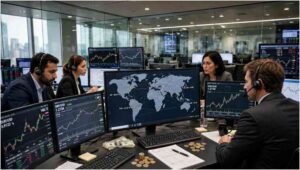
When I plan a currency trade, I check more than whether my platform accepts orders. I also ask whether enough participants are active for efficient pricing. So, what time does the forex market open and close? For most US retail traders, the week begins around 5:00 p.m. Eastern Time on Sunday and ends around 5:00 p.m. ET on Friday.
That answer covers availability, not trade quality. Liquidity, spreads, broker maintenance, holidays, and daylight saving time can change the practical experience.
What Are the Weekly Forex Market Hours?

The global spot forex market operates almost 24 hours a day from Sunday evening through Friday evening. It has no single opening bell because it is an over-the-counter network. The Commodity Futures Trading Commission defines forex as the OTC market for foreign exchange transactions.
The standard US reference is simple:
- Forex opens around 5:00 p.m. ET on Sunday.
- Forex closes around 5:00 p.m. ET on Friday.
- Retail trading is generally unavailable over the weekend.
Broker schedules can differ by a few minutes. OANDA, for example, lists Sunday at 5:05 p.m. through Friday at 4:59 p.m. New York time. It also includes a brief daily break. I therefore treat my broker’s published schedule as the final authority.
Is Forex Truly Open 24 Hours a Day?
“Open 24 hours” means trading moves between financial centers as each region starts its business day. It does not guarantee uninterrupted execution on every retail platform.
Some brokers pause near 5:00 p.m. ET for rollover, financing calculations, or maintenance. Liquidity can also fall during this period.
I avoid assuming that an available quote means normal spreads or fast execution. A platform can technically be open while trading conditions remain poor.
Major Forex Trading Sessions in Eastern Time
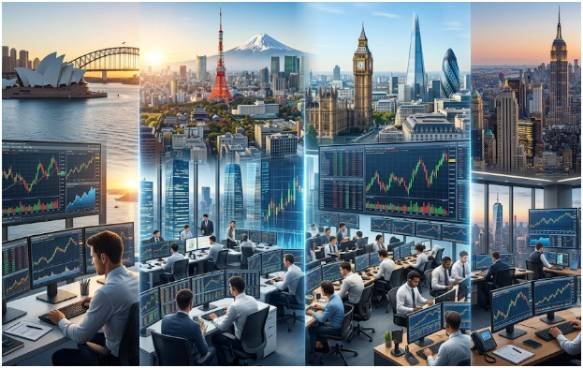
I use session times as approximate liquidity windows rather than fixed exchange bells. Common Eastern Time reference hours include:
- Sydney: about 5:00 p.m. to 2:00 a.m.
- Tokyo: about 7:00 p.m. to 4:00 a.m.
- London: about 3:00 a.m. to noon
- New York: about 8:00 a.m. to 5:00 p.m.
OANDA uses these approximate windows when describing the global trading day. The hours may shift by one hour when countries change their clocks on different dates.
Sydney and Tokyo Trading Hours
The Asian period often attracts activity in AUD, NZD, and JPY currency pairs. Economic releases from Australia, New Zealand, Japan, and China can still produce sharp price movements.
I never assume the Asian session will always be quiet. An interest-rate decision or inflation report can create more volatility than an ordinary US afternoon.
Traders who follow USD/JPY, AUD/USD, or NZD/USD may find this period more relevant than traders focused only on European currencies.
London and New York Trading Hours
London connects late Asian activity with the approaching US morning. The latest Bank for International Settlements survey found that UK sales desks handled 38% of global foreign exchange turnover in April 2025.
New York becomes active around 8:00 a.m. ET. US economic reports often arrive while London remains open, creating an important period of shared activity.
Trading normally continues until around 5:00 p.m. ET. However, participation often falls after London closes.
When Is the Forex Market Most Active?
For many US traders, the busiest practical window is the London–New York overlap. It commonly runs from around 8:00 a.m. to noon ET.
Two major financial centers operate at once during this period. That combination can support stronger volume, faster price movement, and tighter spreads in heavily traded currency pairs.
The BIS reported that average OTC forex turnover reached $9.6 trillion per day in April 2025. The United Kingdom, United States, Singapore, and Hong Kong accounted for 75% of total trading. Forex remains open across global time zones, but activity still concentrates around major financial centers.
My Three-Clock Method
I use three clocks before entering a trade.
The weekly clock tells me whether the forex market is open. The session clock tells me which financial centers are active. The broker clock tells me about rollover, maintenance, and product restrictions.
This method prevents a common mistake: confusing market access with favorable execution.
Suppose I want to trade EUR/USD. At 9:00 a.m. ET, London and New York are active. European and US institutions may both be responding to news, orders, and economic data.
At 5:02 p.m. ET, my broker may be processing rollover while overall participation falls. Both times belong to the trading week, but they can produce very different spreads and fills.
My rule is simple: check whether the market is open, then check who is active.
How Daylight Saving Time Changes Forex Hours
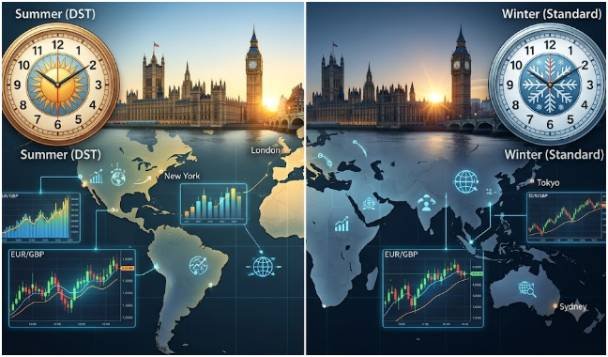
Daylight saving time causes many session-conversion mistakes. New York uses Eastern Daylight Time during summer and Eastern Standard Time during winter.
The National Institute of Standards and Technology states that US daylight saving time runs from March 8 through November 1 in 2026.
London and Sydney use different clock-change dates. Their trading sessions may therefore appear one hour earlier or later on a US clock for several weeks each year.
I keep my trading platform set to New York time and recheck conversions after every seasonal change. Writing “ET” rather than permanently labeling every time “EST” also prevents errors.
A schedule that says 8:00 a.m. ET automatically covers both EST and EDT. A schedule marked only as EST may become misleading during summer.
Do Holidays and Weekends Change Forex Hours?
Retail forex is generally closed from Friday evening until Sunday evening in New York time. However, prices can change while platforms are closed.
Major political, economic, or geopolitical developments may occur over the weekend. Trading can then resume at a different price, producing a weekend gap.
Many national holidays do not close the entire global market. However, holidays in the United States, United Kingdom, Europe, or Japan may reduce participation.
Christmas Day and New Year’s Day can also bring closures or special broker hours. I always check my broker’s holiday notice before placing orders.
Thin liquidity matters because a visible price does not guarantee normal execution. Spreads and slippage may increase when fewer banks and institutions are active.
Which Forex Session Fits Each Currency Pair?
For EUR/USD and GBP/USD, I usually focus on London hours and the London–New York overlap. These pairs connect currencies from the two most influential Western trading centers.
For USD/JPY, I compare Tokyo activity with the New York morning. For AUD/USD and NZD/USD, I watch Asian-Pacific releases and early Asian trading.
An economic calendar remains essential. A major US report released at 8:30 a.m. ET can cause fast price movement, wider spreads, and slippage. Higher activity does not remove risk.
Understanding who are the main participants in the forex market makes the session schedule easier to interpret. Banks, asset managers, corporations, central banks, hedge funds, brokers, and retail traders enter for different reasons.
Their working hours and order flows explain why one trading period can feel highly active while another feels almost empty.
The CFTC also warns that most US retail spot forex trading occurs off-exchange. Customers generally transact with their dealer rather than through a centralized exchange. I verify dealer registration, pricing policies, and risk disclosures before funding an account.
Frequently Asked Questions
1. What time does forex open on Sunday in the USA?
Forex generally opens around 5:00 p.m. ET on Sunday, although individual brokers may begin several minutes later.
2. What time does the forex market close on Friday?
The retail forex trading week normally ends around 5:00 p.m. ET on Friday.
3. Is the forex market open on weekends?
No, retail forex is generally unavailable from Friday evening until Sunday evening in New York time.
4. What is the best time to trade forex in Eastern Time?
Many major currency pairs are most active during the London–New York overlap, commonly from 8:00 a.m. to noon ET.
The Market Is Open—But Is It Worth Trading?
When someone asks what time does the forex market open and close, I give the weekly answer first: around 5:00 p.m. ET Sunday through 5:00 p.m. ET Friday. Then I check the detail that affects my execution—who is active.
My next step is always to save my broker’s official schedule, mark the rollover period, and convert the important sessions into my local clock.
A glowing trade button is not an invitation. Choose the hour when the right participants are actually awake.