A Broker Commission Comparison That Makes Fees Easier to Understand
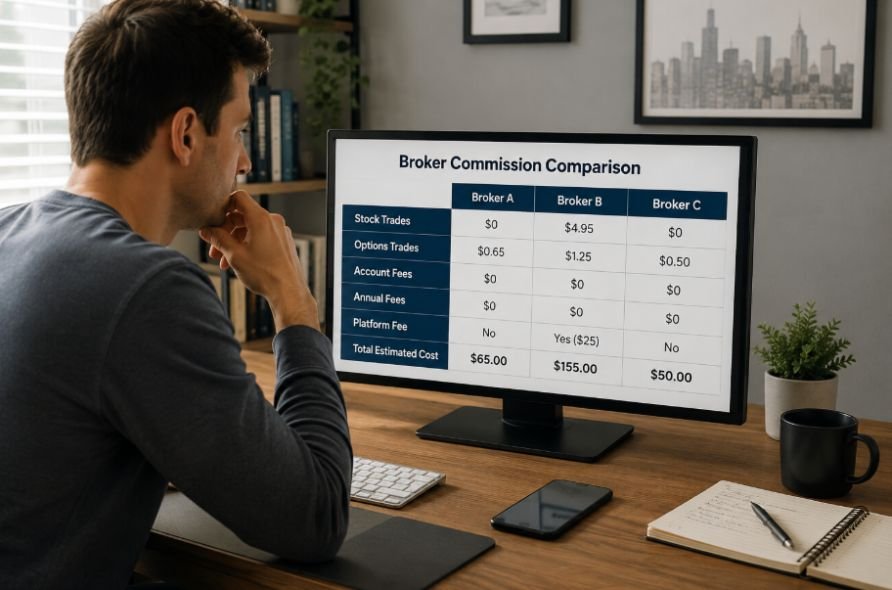
I still remember the first time I compared brokers. I thought it would be simple. One platform advertised zero commissions, another charged a fee for every trade, and a third promised premium tools for active investors. On paper, the cheapest option looked like the obvious winner. The more I read, though, the more I realized I wasn’t comparing the full picture.
That experience completely changed how I look at brokerage fees. A commission is only one part of the cost. Execution quality, hidden charges, account features, and even the way a broker earns revenue can influence what you actually pay over time. A proper broker commission comparison isn’t about finding the lowest number. It’s about understanding where your money goes and whether you’re getting value in return.
Why Broker Commissions Matter More Than You Think

Every dollar paid in fees is a dollar that no longer stays invested. A single commission may seem small, but regular trading or long-term investing can make those costs add up faster than many people expect.
This is why experienced investors rarely look at commission rates alone. They also compare brokerage fees, platform features, customer support, research tools, and order execution. Looking at the complete package often leads to a better decision than chasing the cheapest headline.
Not Every Broker Charges the Same Way
One reason comparing brokers feels confusing is that every business uses a slightly different pricing model.
Discount brokers have become popular because many now offer commission-free trading on stocks and ETFs. Instead of charging directly for every trade, they often generate revenue through other services, including premium subscriptions, margin lending, or payment for order flow.
Full-service brokers follow a different model. They provide investment advice, retirement planning, portfolio management, and ongoing financial guidance. Those additional services usually come with higher fees, often calculated as a percentage of assets under management.
Robo-advisors sit somewhere in between. They automate portfolio management using algorithms and typically charge an annual management fee that is much lower than traditional wealth advisors.
Each model serves a different type of investor. The right choice depends on your goals rather than the advertised commission.
Commission-Free Doesn’t Always Mean Cost-Free
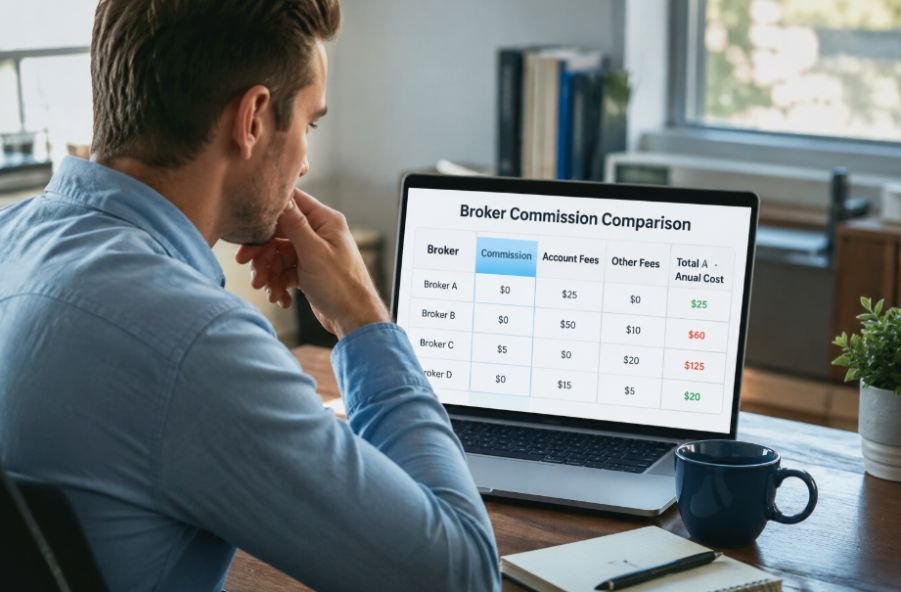
One of the biggest misconceptions in investing is assuming that zero commission means zero cost.
Many brokers still earn money through services that aren’t immediately visible when you open an account. Some charge margin interest if you borrow money to trade. Others collect options contract fees, currency conversion charges, or inactivity fees for accounts that remain unused.
Another cost that often goes unnoticed is the bid-ask spread. The difference between the buying and selling price can quietly affect your overall return, especially if you trade frequently.
None of these charges are necessarily unreasonable. The important part is knowing they exist before choosing a platform.
Why Order Execution Can Matter More Than a Small Commission
A few dollars saved on commissions can quickly disappear if your trades consistently execute at less favorable prices.
Understanding who are the main participants in the forex market can also explain why liquidity and execution quality change throughout the trading day. Banks, financial institutions, corporations, hedge funds, brokers, and retail traders all influence order flow, pricing, spreads, and the availability of buyers and sellers.
High-quality order execution helps investors receive prices closer to the current market value. Better execution can sometimes offset a commission because improved pricing reduces hidden trading costs.
This is one reason many experienced investors compare execution quality alongside published brokerage fees. Saving money isn’t only about paying lower commissions. It’s also about getting better overall value on every trade.
Choosing a Broker Based on Your Investing Style

There isn’t a single broker that’s perfect for everyone.
If you invest occasionally and mainly buy long-term holdings, commission-free trading with simple research tools may be more than enough.
Active traders often prioritize fast execution, advanced charting, customizable platforms, and reliable customer support. Paying slightly higher fees can make sense if those features improve trading decisions.
Investors looking for retirement planning or estate advice may find greater value in full-service brokers despite the higher annual costs. Professional guidance can outweigh additional fees when managing larger portfolios or complex financial situations.
If you’re still weighing different platforms, our broker selection guide explains the key features worth comparing before opening an account.
Broker Commissions Outside the Stock Market
Broker commissions aren’t limited to investing.
Real estate follows a very different commission structure. Traditional home sales usually involve a commission that’s shared between the listing agent and the buyer’s agent. Some brokerages now offer flat-fee services or fixed monthly models instead of percentage-based commissions.
Although the industries differ, the lesson stays the same. Comparing commission structures without understanding what’s included can lead to inaccurate conclusions.
Whether you’re investing or buying property, transparency matters far more than a low advertised fee.
Compare Value Before You Compare Price

A broker commission comparison should never end with a single percentage or dollar amount.
Instead, consider questions like:
- What services are included?
- Are there hidden fees?
- How strong is the trading platform?
- Does the broker provide quality research and educational resources?
- Is customer support available when you need it?
Those answers often reveal much more than a commission table ever could.
Frequently Asked Questions
1. What is a broker commission?
A broker commission is the fee charged for completing a transaction or providing brokerage services. It may be charged per trade, as a percentage, or through an annual management fee.
2. Are commission-free brokers really free?
Not entirely. Many earn revenue through spreads, margin interest, options fees, premium services, or payment for order flow instead of charging a direct trading commission.
3. Should I always choose the lowest commission?
No. Platform quality, research tools, execution speed, customer service, and additional fees can have a bigger impact on your overall investing experience than the commission alone.
4. How often should I compare brokerage fees?
Review your broker whenever your investing style changes or new platforms enter the market. Fee structures and available features can change over time.
Looking Beyond the Price Tag
I’ve learned that comparing brokers isn’t about finding the lowest commission. It’s about understanding how every fee, feature, and service fits the way I invest. A platform that looks inexpensive at first glance may end up costing more if it lacks reliable execution or charges hidden fees elsewhere. On the other hand, paying slightly more can be worthwhile when the overall experience supports better decisions and long-term results.
The smartest comparison isn’t the one that finds the cheapest broker. It’s the one that finds the best value for your goals.