How to Identify Hidden Fees Charged by Forex Brokers Without Reading Every Fine Print
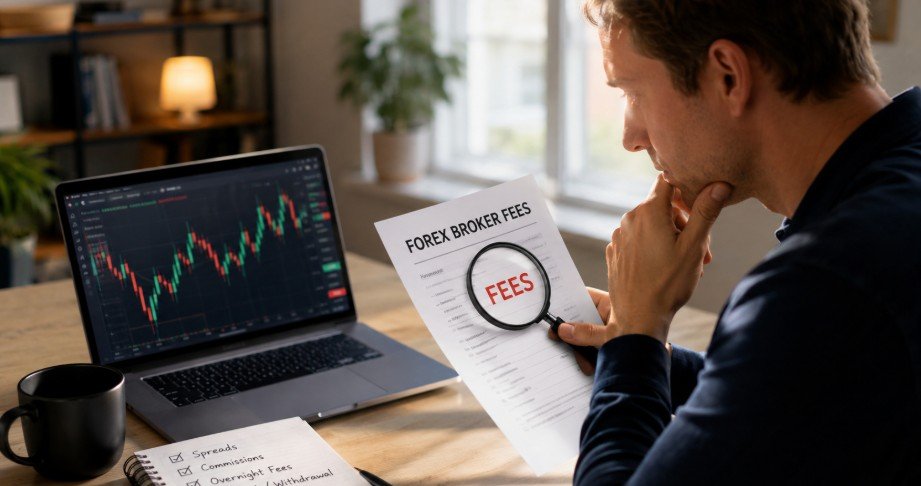
I still remember opening my first trading account and feeling pretty confident that I’d found a low-cost broker. The website advertised tight spreads, zero commission on selected trades, and fast execution. Everything sounded great until I compared my trade history a few weeks later. My profits weren’t disappearing because of bad trades. Small charges I hadn’t paid attention to were quietly adding up.
That experience taught me something many new traders eventually discover. The cheapest-looking broker isn’t always the most affordable one. Hidden costs often sit outside the headline pricing, and you don’t have to spend hours reading legal documents to find them. Once you know where to look, spotting those fees becomes much easier.
Why Hidden Fees Matter More Than You Think

Every trade has a cost, but not every cost is obvious. Some brokers clearly display their commissions and spreads, while others recover their revenue through wider spreads, inflated swap rates, or account-related charges that many traders overlook.
A few extra dollars may not seem important at first. However, if you trade regularly or hold positions for several days, those small costs can gradually reduce your overall returns. That’s why experienced traders compare the total trading cost instead of focusing on a single advertised number.
Start With the Spread, Not the Advertisement
One of the quickest ways to identify hidden fees charged by forex brokers is by looking at the live spread instead of the promotional material.
Understanding how to read a forex quote for beginners helps you recognize the bid price, ask price, and difference between them, making it easier to see the actual spread charged whenever you enter a trade.
Many brokers advertise minimum spreads that only appear during ideal market conditions. The spread you actually receive during active trading hours is often a better indicator of what you’ll pay.
A simple way to check is by opening a demo or live account during the London and New York session overlap. Compare the spread shown on your trading platform with the broker’s advertised spread. If there’s a noticeable difference most of the time, you’re paying more than the marketing suggests.
Calculate the Real Cost of Every Trade
A broker offering zero commission doesn’t automatically mean lower trading costs.
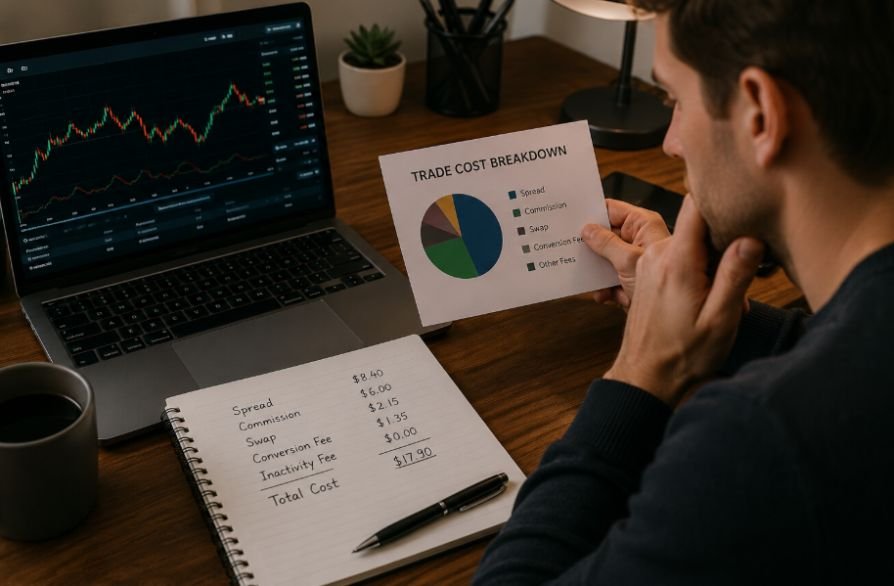
The real price of a trade combines several factors, including the bid-ask spread, commission, and any additional charges that apply when opening or closing a position. Looking at only one number rarely gives the full picture.
A practical habit is to calculate the round-turn cost. Add the commission charged for opening and closing the trade to the average spread. That single calculation provides a much clearer picture of what each trade actually costs.
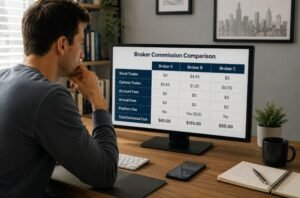
This is also where a broker commission comparison becomes valuable because it helps you evaluate total costs instead of comparing one fee in isolation.
Don’t Ignore Overnight Charges
Not every trader closes positions before the market ends each day.
If you hold trades overnight, swap fees, also called rollover charges, become an important part of your trading expenses. These fees are based on interest rate differences between currencies, but some brokers apply larger markups than others.
For day traders, swap charges may not matter much. Swing traders and position traders, however, can see these costs accumulate over weeks or months.
Checking a broker’s contract specifications before funding your account gives you a clearer understanding of overnight financing costs.
Look Beyond Trading Fees
Some of the most overlooked charges have nothing to do with placing trades.
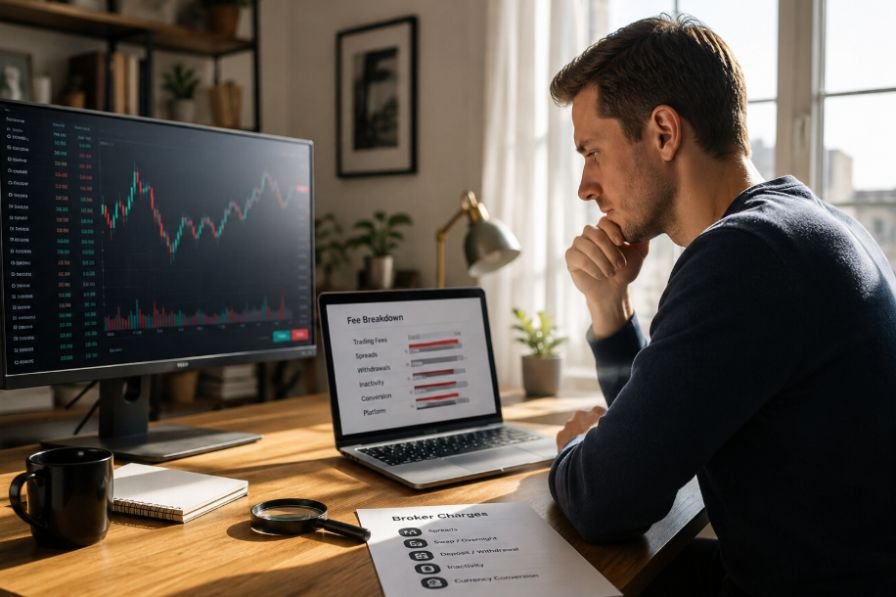
Many brokers apply fees when withdrawing funds, converting currencies, or leaving an account inactive for several months. These charges often surprise traders because they don’t appear during the account registration process.
Common non-trading fees include:
- Inactivity fees after several months without trading.
- Withdrawal charges on specific payment methods.
- Currency conversion fees when your account currency differs from your bank account.
- Account maintenance fees on certain account types.
These costs may seem small individually, but together they can become surprisingly expensive.
Check the Right Pages Instead of Reading Everything
Reading every page of a broker agreement isn’t realistic for most people.
Instead, visit pages labeled “Contract Specifications,” “Pricing,” “Trading Costs,” or “Non-Trading Fees.” These sections usually contain the information that affects your account the most.
If the broker makes these details difficult to locate or explains pricing in vague language, consider it a warning sign. Transparent brokers generally make their fee structure easy to understand because they have little to hide.
Watch for These Warning Signs

You don’t need years of trading experience to recognize potential pricing problems.
A few simple checks can reveal whether a broker deserves a closer look.
- Extremely low advertised spreads with little explanation.
- High withdrawal charges compared to competitors.
- Large overnight swap markups.
- Missing or difficult-to-find pricing pages.
- Complicated commission structures that are hard to calculate.
- Unclear inactivity policies.
If more than one of these signs appears, it’s worth taking extra time before depositing money.
Transparency Is Usually Worth More Than the Lowest Price
Many traders spend their time searching for the broker with the lowest spread. In reality, transparent pricing is often more valuable than the cheapest advertisement.
A broker that clearly explains commissions, spreads, execution methods, and non-trading fees allows you to calculate costs before placing a trade. That level of transparency makes it much easier to manage risk and avoid unpleasant surprises later.
The goal isn’t simply paying less. It’s knowing exactly what you’re paying for.
Frequently Asked Questions
1. Can a broker advertise zero commission and still charge hidden fees?
Yes. Some brokers recover costs through wider spreads, higher swap rates, or account-related fees instead of charging a direct commission.
2. How can I quickly check if a broker’s spreads are accurate?
Open a demo or live account during active market hours and compare the live spread with the advertised spread on the broker’s website.
3. Which hidden fee affects long-term traders the most?
Overnight swap charges often have the biggest impact because they apply every day a position remains open.
4. Should I only compare spreads when choosing a broker?
No. Compare spreads, commissions, withdrawal fees, inactivity charges, and overnight costs to understand the total trading expense.
The Small Numbers That Make the Biggest Difference
I’ve learned that hidden fees rarely appear as one large charge. They usually arrive as small costs that seem harmless until they quietly reduce your trading results over time. Spending a few extra minutes checking spreads, swap rates, and account fees before opening an account is much easier than discovering them after you’ve already invested your money.
The smartest trading decisions often begin long before the first trade is placed.